








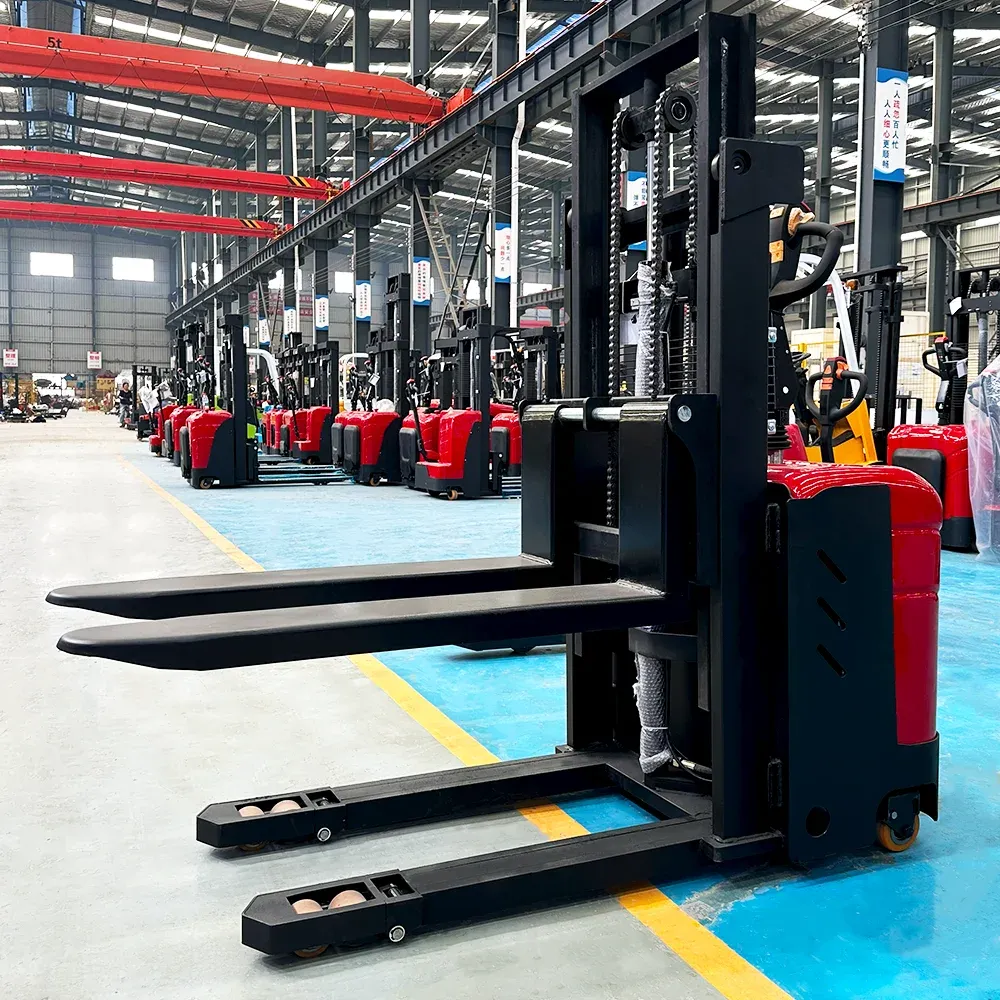
Ride-On Electric Stacker
Step on the pedals and stop walking — rider throughput without a seat · Stand-on rider stackers, CPDS15 / CPDS20
Once aisles get long, the operator's legs become the slowest part of the system. The CPDS15 and CPDS20 ride-on electric stackers fix that with stand-on pedals and guard rails: the operator rides the machine between picks instead of walking beside it. Capacity is 1,500 kg or 2,000 kg on a 48 V system, with drive and lift motors sized per model and a double-lift mast option for working two pallet faces. Same Shandong factory, same 18-month warranty as the rest of our stacker line.
Models & technical data
| Item | CPDS15 | CPDS20 |
|---|---|---|
| Rated capacity | 1,500 kg | 2,000 kg |
| Overall length | 1,934 mm | 1,934 mm |
| Min. turning radius | 1,500 mm | 1,500 mm |
| Battery voltage | 48 V | 48 V |
| Drive / lift motor | 1,500 / 2,200 W | 2,000 / 3,000 W |
| Lift height | 1,600–5,500 mm, custom | 1,600–5,500 mm, custom |
| Forks | 1,150 × 190 × 60 mm | 1,150 × 190 × 60 mm |
| Battery type | Lead-acid or lithium | Lead-acid or lithium |
| Warranty / certification | 18 months, CE / ISO 9001 | 18 months, CE / ISO 9001 |
Factory figures for the CPDS15/20 rider models; mast heights, fork sizes and battery chemistry are configured per order.
Watch it work
Key features
- Two models: CPDS15 at 1,500 kg and CPDS20 at 2,000 kg rated capacity
- Stand-on pedals with guard rails — rider operation for long aisle runs
- 48 V system; 1,500/2,200 W drive/lift motors (CPDS15), 2,000/3,000 W (CPDS20)
- Double-lift configuration available: initial lift plus mast lift
- 1,934 mm overall length with a 1,500 mm minimum turning radius
- Tiller head with keypad access, battery/voltage display and horn
- Emergency stop within reach of the standing operator
Where it works
Why riders beat walkers past a certain aisle length
A walk-behind stacker is capped at walking pace by definition. Put the operator on the machine and that cap disappears: over a 60 m aisle, riding instead of walking saves minutes per round trip, and those minutes repeat every trip, every shift. That is the whole case for the rider format — not comfort, throughput.
On the CPDS rider the operator stands on widened pedals inside guard rails, with the tiller, keypad and battery display in front. Keypad access stops unauthorized use; the voltage readout — visible in the gallery photo of the control head — tells the charger story at a glance between runs.
CPDS15 and CPDS20 hardware: motors, mast, double lift
The two models share the 1,934 mm chassis and 1,500 mm turning radius; the difference is muscle. CPDS15 pairs a 1,500 W drive motor with a 2,200 W lift motor for 1,500 kg loads; CPDS20 steps up to 2,000 W and 3,000 W for the full 2,000 kg. Both run 48 V packs, lead-acid or lithium.
The double-lift version adds an initial lift under the forks on top of the mast lift. In practice that means the machine can carry one pallet raised on the forks while the straddle legs clear the floor — useful where ground unevenness or dock plates eat standard ground clearance, and the configuration shown on several gallery machines.
Rider stacker, walkie stacker or reach truck?
Pick by travel distance and rack height. Short aisles and modest throughput: the walk-behind CPDS electric stacker costs less and does the same lifting. Long runs at the same heights: this rider model. Racking above roughly 4 m in narrow aisles with full-time put-away: that is reach truck territory — our CPDR15/20 page covers it.
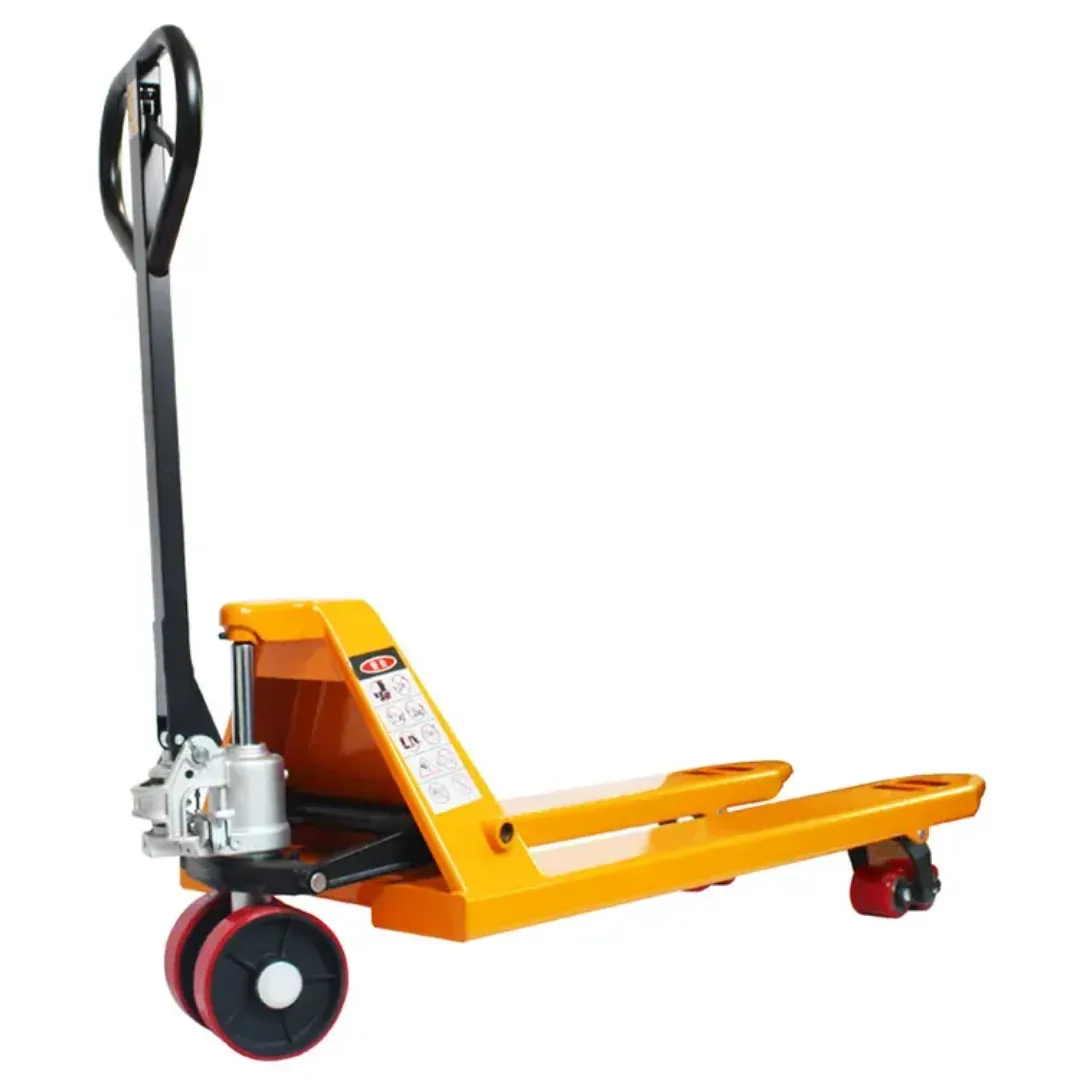
Buyers running mixed fleets often pair one rider pallet truck for the long hauls with walk-behind units feeding it. Because our stackers share battery voltage and control logic, mixing models inside one warehouse does not mean mixing spare parts suppliers.

Common questions
What is a walkie rider stacker?
A pallet stacker the operator can ride standing up. Fold down the pedals, step inside the guard rails, and the machine carries you between picks instead of making you walk beside it. The CPDS15/20 works both ways — walk it in tight corners, ride it down long aisles.
When should I upgrade from a walk-behind to a ride-on pallet stacker?
When travel, not lifting, eats the shift. Rough rule: aisle runs beyond 40–50 m or operators covering several kilometers per shift justify the rider. If your warehouse is compact, keep the cheaper walk-behind electric stacker and spend the difference on a taller mast or lithium pack.
What does double-lift mean on a rider pallet truck?
Two lifting actions on one machine: an initial lift that raises the forks and load for travel clearance, plus the main mast lift for stacking. It protects loads over rough floors and dock transitions, and lets the forks carry a pallet high while the legs roll low. Optional on the CPDS series.
How much weight can the CPDS20 stand-on stacker carry?
Rated capacity is 2,000 kg; the CPDS15 carries 1,500 kg. As with every mast machine, capacity derates as lift height rises, so ask for the residual-capacity figures at your top beam height — we issue them with the datasheet rather than quoting the headline number alone.
Do stand-on stackers need special operator training?
They are simpler than seated trucks but still powered industrial equipment: operators should be trained on the controls, the reversing pad and load limits, and local regulations may require formal certification. We supply the manual, control diagrams and video support; licensing rules are set by your jurisdiction.
Request pricing for the Ride-On Electric Stacker
Send your target model, quantity and destination port. Our export team replies within one business day with a quote, lead time and shipping details.
- Phone / WhatsApp: +86 182 5478 8200
- Email: [email protected]
- Jining, Shandong, China