








Are Chinese Skid Steers Any Good? An Honest Reality Check for Buyers
2026-06-12
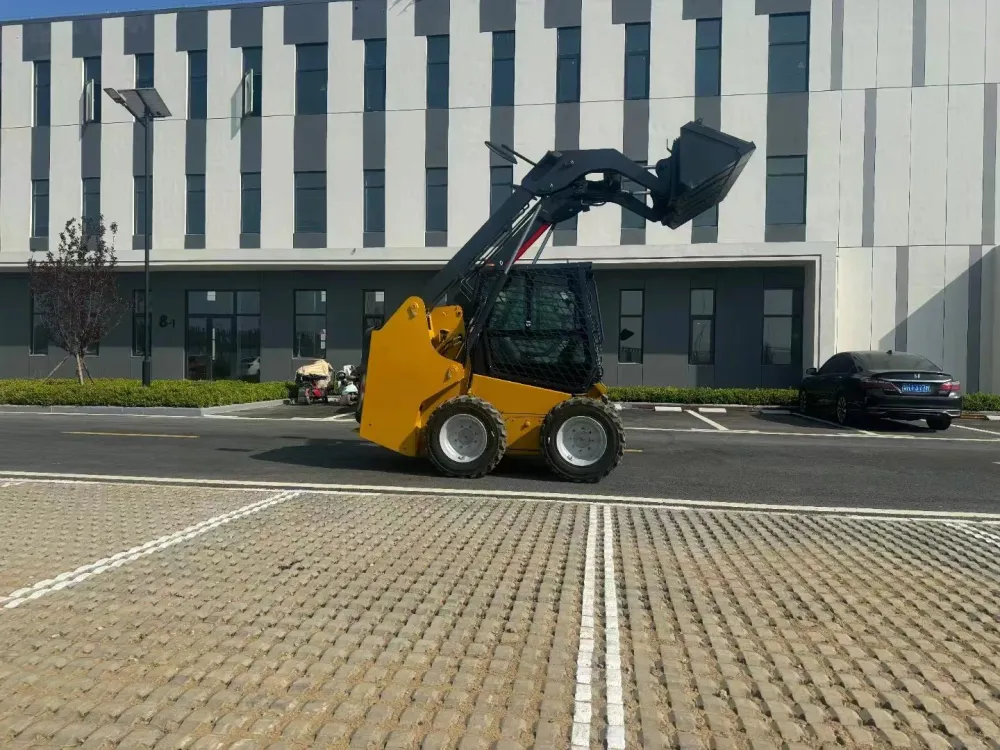
An honest reality check on the Chinese skid steer — where build quality now stands, what the component platforms really are, and how to judge support before you buy.
"Are Chinese skid steers any good?" is the question every buyer types before they spend the money, and the honest answer is: it depends entirely on who built the one in front of you. The blanket reputation — cheap, rough, unsupported — was earned a decade ago by trading-house machines, and it has stuck around long after the better factories outgrew it.
This is a reality check, not a sales pitch. A Chinese skid steer today can be a genuinely sound work machine or a yard ornament, and the difference comes down to a handful of things you can actually verify before you pay. Here's where the category really stands.
The component gap has mostly closed
The old worry was that the guts were unknown — some mystery engine and a hydraulic system nobody could service. That's no longer the default. A serious Chinese skid steer for sale today is typically built around the same globally recognized engine families and hydraulic components that the legacy brands use, because those parts are bought on the open market by everyone.
What that means in practice: the loader arm geometry, the auxiliary hydraulic flow, the lift and tilt forces — these are now competitive on paper and in the field. The raw capability gap that justified the old reputation has narrowed to the point where it's rarely the deciding factor anymore.
You can compare configurations directly on our skid steer loader range, which lists rated operating capacity, auxiliary flow, and lift type per model.
Where Chinese skid steers still vary the most
If the components have converged, where does the real spread live? In three places that have nothing to do with the data sheet:
- Fit and finish — weld consistency, hose routing, panel gaps, and how serviceable the engine bay actually is when you need to reach a filter.
- Quality control — whether every machine off the line gets tested under load, or whether QC is a stamp on a form.
- The seller behind it — a manufacturer who stands behind the warranty versus a reseller who forwards your problem and goes quiet.
This is why two machines with identical spec sheets can give you wildly different ownership experiences. The reading on a Chinese skid steer review tells you about one buyer's specific supplier, not about an entire country's output.
Auxiliary hydraulics: the spec that actually matters
A skid steer earns its keep through attachments, so the auxiliary hydraulic system is where you should concentrate your scrutiny. A mulcher, a cold planer, or a flail head will pull more flow than a bucket ever does, and an underspecced auxiliary circuit turns a capable loader into a frustrating one.
Ask for the standard and high-flow auxiliary ratings in writing, confirm the coupler standard so your attachments actually fit, and check that the quick-attach plate is an industry-standard pattern rather than something proprietary. A machine that locks you into one supplier's attachments is a machine that costs you for years.
Judging the factory, not the flag
The useful version of "is it any good" is "is this one any good," and you answer that by vetting the builder. For skid steers and for the related Chinese backhoes in the same catalogs, the checks are identical:
- Confirm you're talking to the actual manufacturer — ask for a live video walk of the production and QC line.
- Inspect welds, hose protection, and pin fit on the specific unit, from real photos, not catalog renders.
- Insist on recognized engine and hydraulic platforms so parts and service exist worldwide.
A factory proud of its work hands you all of this in a day. A reseller hiding a weak supply chain stalls. The same logic applies across compact equipment — our note on vetting a Chinese mini excavator factory walks through the line-walk and parts checks in more depth.
Parts and support over a five-year horizon
The category's worst reputation came from machines that ran fine until the first failure, then sat broken because no part could be had. That's the risk that still separates a good buy from a bad one — and it's entirely about the supplier, not the origin.
Before you commit, get firm answers: does the supplier stock wear items like couplers, hoses, filters, and final-drive seals, or make them to order? How fast can an urgent part ship by air? Is there a real parts catalog with numbers? And who answers a technical fault in year three, in what time zone? Put the warranty term and the support terms in the contract while you still have leverage.
The honest verdict
Are Chinese skid steers any good? Many are now genuinely competitive machines, a few are still rough, and the country of origin is a poor way to tell them apart. The real predictor is whether the seller is a manufacturer with standard, serviceable components, an industry-standard attachment interface, and a parts pipeline that reaches your yard. Get those right and a skid steer from China will work as hard as anything else in the class. Skip the homework and you're back to the old reputation — but that's a sourcing failure, not a country one.
Browse our skid steer range · — we reply within one business day.
Frequently asked questions
Are Chinese skid steers any good?
Many are now genuinely competitive. The component gap has largely closed — most serious machines use the same global engine and hydraulic platforms as legacy brands — so capability is rarely the deciding factor. The real spread is in fit, quality control, and the supplier's support and parts pipeline, which is why one buyer's experience can differ completely from another's.
What engine and hydraulics are in a Chinese skid steer?
A reputable manufacturer builds around globally recognized engine families and standard hydraulic components, since those parts are bought on the open market industry-wide. Always get the exact engine model and hydraulic make in writing — a known platform means filters, seals, and service exist worldwide, which matters far more than the machine's country of origin.
What should I check before buying a Chinese skid steer?
Confirm you're dealing with the actual factory, not a reseller; inspect welds, hose routing, and pin fit on the specific unit; verify the auxiliary hydraulic flow and that the quick-attach plate is an industry-standard pattern; and pin down parts stock, shipping lead time, and written warranty and support terms before paying a deposit.
Will I be able to get attachments and parts for a Chinese skid steer?
If you buy correctly, yes. Insist on a standard quick-attach pattern so off-the-shelf attachments fit, and confirm the supplier stocks wear items and can air-freight urgent parts with a documented parts catalog. A proprietary attachment plate or a make-to-order parts policy is the warning sign to walk away from.
Related articles
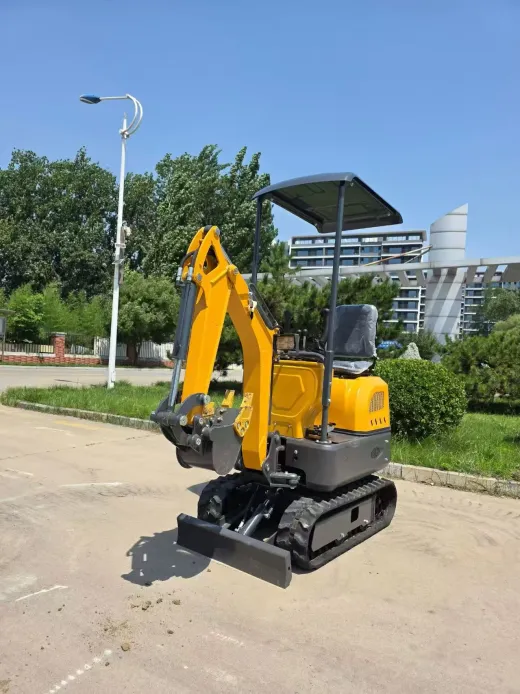
Amphibious Mini Excavators: Working on Water, Marshes & Wetlands
A clear-headed guide to amphibious and floating mini excavators — how pontoon undercarriages work, where they outperform standard machines, their real limitations, and when wide rubber tracks are the smarter choice for wet and soft-ground work.
Read more →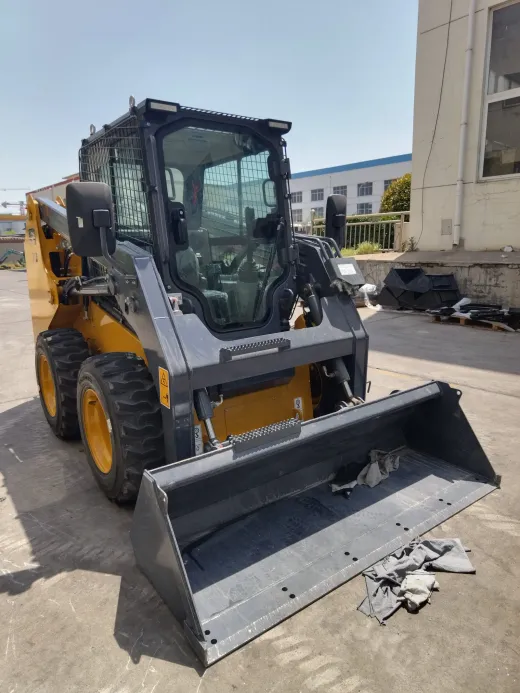
Articulating Loaders Explained: Compact & Mini Articulated Loaders
An articulating loader offers superior maneuverability in tight spaces where conventional machines struggle. This guide covers everything buyers need to know about small, compact, and mini articulated loaders — from how they work to what to look for when shopping.
Read more →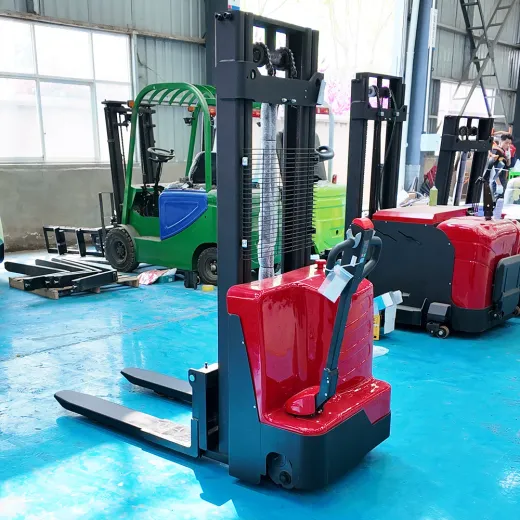
Autonomous Pallet Movers & AGV Pallet Jacks: What Warehouses Need to Know
Before spending six figures on an autonomous pallet mover or AGV pallet jack system, read this guide. We break down how the technology works, true ROI timelines, and why most small-to-mid-size warehouses still get better returns from electric stackers and manual pallet trucks.
Read more →