








How to Choose a Pallet Jack: Manual vs Electric vs Scale Models
2026-06-12
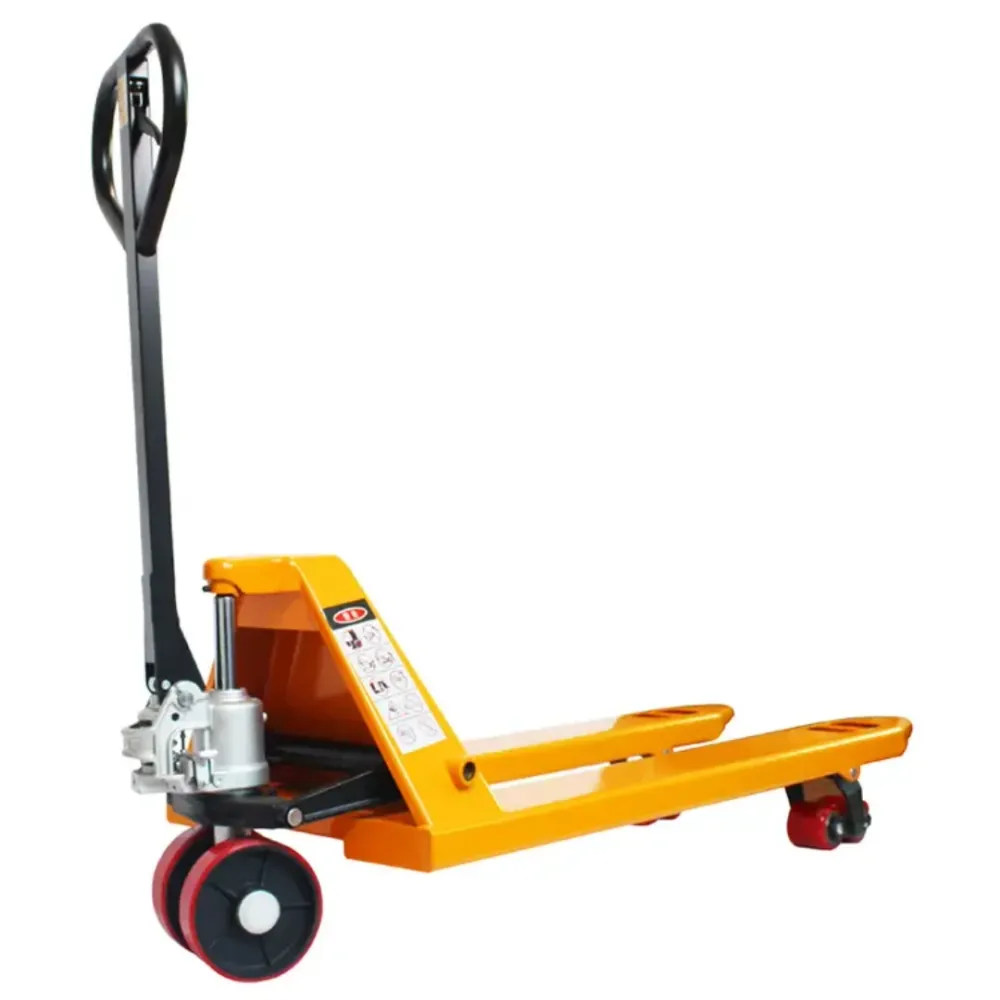
A practical buyer's guide to picking the best pallet jack — manual hand pallet truck, electric pallet jack, or a model with a built-in weighing scale — covering types, operation, maintenance and floor requirements.
Every warehouse has at least one pallet jack, and most have several that nobody chose on purpose — they just turned up. That's fine until throughput climbs, the loads get heavier, or someone's shoulder gives out from pumping a manual unit twenty times a shift. Then the question of which one to actually buy starts to matter.
The choice comes down to three things: how heavy and how often you move pallets, whether you need to weigh them, and what your floor is like. Sort those out and the rest is easy.
Manual hand pallet truck: the workhorse default
A hand pallet truck is the right starting point for most operations, and for a lot of them it's the finishing point too. It's mechanical, there's nothing to charge, and a decent one moves loads up to a couple of tons across a flat floor without complaint. If pallets move in short bursts — receiving a delivery, loading a truck once or twice a day — the best hand pallet truck for you is simply a well-built manual one with a smooth pump and a frame that won't bend.
The honest limit is volume. The moment one person is moving pallets more or less continuously, the pumping and pushing turns into a fatigue and injury problem. That's the signal to look at electric.
Electric pallet jack: when distance and frequency add up
The argument for the best electric pallet jack is straightforward: drive and lift power come from a battery, not a back. The operator walks alongside and steers; the truck does the work. This pays off in three situations:
- Long travel distances — moving pallets across a big floor or between loading bays all day.
- High frequency — order picking, replenishment, or anywhere one person handles dozens of pallets per shift.
- Heavy and repeated loads — full pallets, again and again, where manual pumping is just grinding people down.
Modern units run on lithium or sealed lead-acid batteries; lithium charges faster and tops up between tasks without a memory penalty, which matters in multi-shift operations. Match the rated capacity to your heaviest regular pallet, not your lightest, and leave headroom.
Pallet jack with a weighing scale: weigh where you move
A pallet jack with weighing scale built into the forks lets you weigh a load at the point you lift it — no separate floor scale, no double handling. For shipping departments, recycling and scrap operations, or anyone billing by weight, that's real time saved on every pallet.
If you go this route, ask two questions before you buy: what's the readout accuracy and increment, and is it legal-for-trade certified where you operate? A pallet jack with scale used only for internal checks has looser requirements than one whose number ends up on an invoice or a shipping document. Both manual and electric versions exist, so you don't have to give up your preferred drive type to get the scale.
Types of pallet jacks: a quick reference
The different types of pallet jacks cover more ground than most buyers realize. The main types of pallet jacks in use are:
- Standard manual hand pallet truck — the baseline mechanical unit for flat floors and light duty cycles.
- Electric pallet jack (walkie) — battery-powered drive and lift; the operator walks alongside. Best for high-frequency or long-distance movement.
- Rider pallet jack (riding pallet jack) — an electric unit where the operator stands on a platform and rides with the load. Suited to very long runs in large warehouses where walking alongside is too slow. A riding a pallet jack or riding pallet jack setup reduces operator fatigue on long horizontal hauls significantly.
- Pallet jack with scale — any of the above with integrated load cells in the forks.
- Racking jack — a specialized unit designed for pallet rack work, typically narrower and with features that assist rack entry alignment.
- High-lift pallet jack (pallet jack that lifts) — raises the pallet higher than a standard truck but not to racking height; used for ergonomic work positioning rather than storage.
Knowing which type fits your work before you shop saves you from buying a standard unit and discovering you needed a rider or a high-lift.
Fork length, width and lowered height
The forks have to match your pallets, not the other way around. Standard forks suit standard pallets, but if you handle long, custom, or undersized pallets, confirm the fork length and the outside width before ordering. Two dimensions people forget:
- Lowered height — the forks must drop low enough to slide cleanly into your pallet's entry. Closed-deck or block pallets are less forgiving than stringer pallets.
- Wheel layout — single vs tandem load rollers change how the truck behaves at the end of a fork stroke and over floor joints.
Browse our pallet jack range and you'll see fork and wheel options listed per model so you can line them up against your pallets directly.
Read your floor before you buy
The flattest, smoothest concrete makes any pallet jack look good. Real floors have ramps, expansion joints, dock plates, and the occasional patch of debris. On a perfectly flat floor a manual truck is fine; the second you add a ramp or a slope, manual pushing under load becomes a two-person job or a hazard, and an electric unit earns its price immediately.
Steel wheels roll easier and last longer on clean concrete; polyurethane is quieter and kinder to coated or finished floors but wears faster on grit. Pick the wheel for the surface you actually have.
Operating a pallet jack safely and efficiently
Operating a pallet jack correctly is simple but worth stating clearly, because most accidents happen when operators skip the basics. When using a pallet truck or driving a pallet jack on flat ground, the key rules are: always engage the pallet jack handle before lifting, verify the load is centered and stable, lower the forks to travel height before moving, and keep the load at the lowest practical travel height. On a manual unit, the pump action on the handle builds hydraulic pressure to raise the forks — operate the handle smoothly, not aggressively.
Driving a pallet jack in a busy warehouse means following the same traffic rules as any other vehicle: yield to pedestrians, signal turns, and never exceed a walking speed on ramps. A pallet jack chock or pallet truck chock should be used whenever the truck is parked on a slope or a loading dock, to prevent unintended movement. For rider units, riding a pallet jack safely means keeping feet on the platform and body within the guard rails at all times — never stand on a unit not rated for a rider.
Common maintenance: pallet jack not lifting and hydraulic pump issues
The most common complaint on a manual pallet truck — pallet jack not lifting — almost always comes down to the pallet jack hydraulic pump. The pump relies on a simple hydraulic circuit; when a unit stops lifting, the first things to check are the hydraulic fluid level (low fluid is the most common cause) and whether the release valve is fully closed before pumping. Air in the system — often from running the unit dry — can also prevent the forks from rising.
On an electric unit, the pallet truck hydraulic pump is driven by the battery, so a unit that lifts slowly or not at all usually points to a low battery or a faulty pump motor rather than a fluid issue. Basic repairing pallet jack work — replacing seals, topping up hydraulic oil, bleeding air — is straightforward on units built to standard hydraulic specifications. The reason to verify this before buying: a pallet jack with a proprietary or unusual hydraulic circuit is harder and more expensive to service locally. Standard hydraulics mean any competent technician can maintain and repair the unit wherever it operates.
When to step up to a stacker instead
A pallet jack moves pallets along the floor. The moment you need to lift a pallet onto racking or stack one on another, you've outgrown it — that's a stacker's job, not a pallet truck's. If your operation is starting to put things up rather than just move them around, read our guide on choosing between a pallet jack, stacker and reach truck before you buy a second pallet jack you'll quickly need to replace.
A quick buyer's checklist
Before you ask for a quote, pin these down:
- Heaviest pallet you move regularly (set capacity above it)
- How often pallets move — bursts or all day
- Travel distance and whether there are ramps or slopes
- Do you need to weigh loads, and does the number go on an invoice
- Pallet type, fork length, and required lowered height
- Floor surface — bare concrete, coated, or rough
Six answers and any supplier can spec the right truck in one conversation. None of them and you'll be sold whatever's on the shelf.
Browse our pallet jack range · — we reply within one business day.
Frequently asked questions
Should I buy a manual or electric pallet jack?
Go manual if pallets move in short bursts on a flat floor — it's cheaper, needs no charging, and handles a couple of tons fine. Move to electric when one person is moving pallets more or less continuously, travel distances are long, or there are ramps, because that's where manual pumping turns into a fatigue and injury problem.
What is the best pallet jack for heavy daily use?
For continuous heavy use, the best pallet jack is an electric pallet truck rated above your heaviest regular load, ideally on a lithium battery so it can top up between tasks. A manual hand pallet truck is the better value only when pallets move occasionally rather than all shift.
Is a pallet jack with a weighing scale worth it?
If you bill or ship by weight, yes — weighing at the point of lift saves handling a load twice. Check the readout accuracy and whether it needs legal-for-trade certification in your region; a scale used only for internal checks has looser requirements than one whose weight appears on an invoice.
How much weight can a pallet jack lift?
Common manual and electric pallet trucks handle loads in the region of two to two-and-a-half tons, but rated capacity varies by model. Always size capacity above your heaviest regular pallet and leave headroom rather than buying to your average load.
What are the different types of pallet jacks?
The main types are: manual hand pallet truck (mechanical, no charging), electric walkie pallet jack (battery-powered drive and lift), rider pallet jack (operator rides on a platform for long runs), pallet jack with scale (integrated load cells for weighing), racking jack (specialized for rack work), and high-lift pallet jack (raises loads higher for ergonomic positioning). Match the type to your travel distance, load frequency, and floor layout.
Why is my pallet jack not lifting?
On a manual unit, the most common causes are low hydraulic fluid, air in the hydraulic pump system, or a release valve that isn't fully closed before pumping. On an electric unit, a slow or non-lifting fork usually points to a low battery or faulty pump motor. Most of these are straightforward repairs on units with standard hydraulic circuits.
Is it safe to ride on a pallet jack?
Only on units rated and designed for a rider — a riding pallet jack or walkie-rider with a proper operator platform and guard rails. Standard manual or walkie pallet jacks are not designed for riding and should never be used that way. Always use the truck as it was designed to be operated.
Related articles
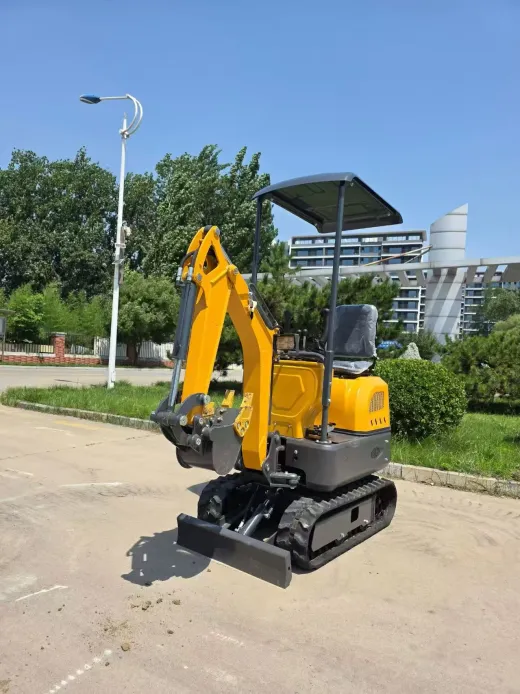
Amphibious Mini Excavators: Working on Water, Marshes & Wetlands
A clear-headed guide to amphibious and floating mini excavators — how pontoon undercarriages work, where they outperform standard machines, their real limitations, and when wide rubber tracks are the smarter choice for wet and soft-ground work.
Read more →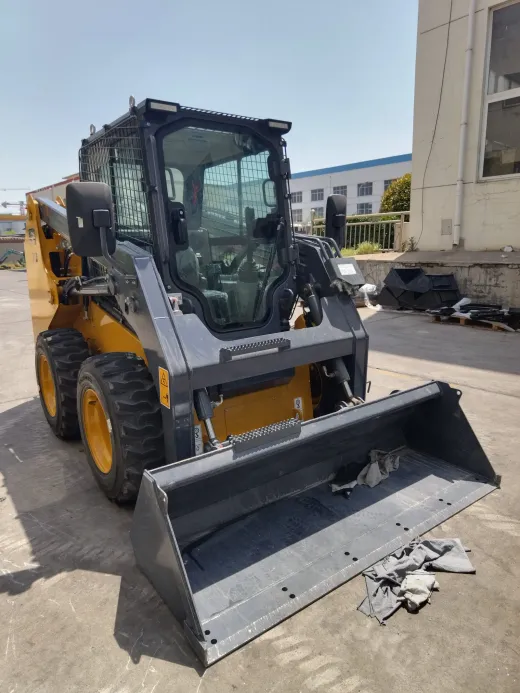
Articulating Loaders Explained: Compact & Mini Articulated Loaders
An articulating loader offers superior maneuverability in tight spaces where conventional machines struggle. This guide covers everything buyers need to know about small, compact, and mini articulated loaders — from how they work to what to look for when shopping.
Read more →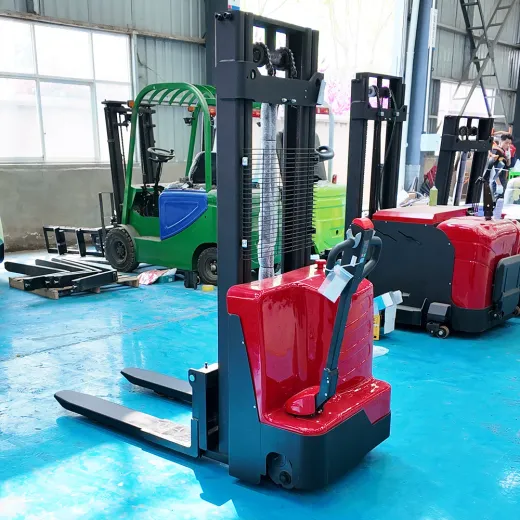
Autonomous Pallet Movers & AGV Pallet Jacks: What Warehouses Need to Know
Before spending six figures on an autonomous pallet mover or AGV pallet jack system, read this guide. We break down how the technology works, true ROI timelines, and why most small-to-mid-size warehouses still get better returns from electric stackers and manual pallet trucks.
Read more →